Microsoft Fabric, for analytics that fits your stack.
Fabric brings data engineering, warehousing, Power BI and governance into one Microsoft-native platform. For teams already living in Azure and the Microsoft 365 ecosystem, it means fewer tools to stitch together and one place for data to live.


Where Microsoft Fabric earns its place in the stack.
Unified data platform
OneLake gives every workload — warehouse, lakehouse, pipelines, Power BI — a single copy of the data, instead of five tools each with their own.
BI that sits on live data
Power BI reports built directly on Fabric datasets, with no separate extract step and no stale numbers waiting on an overnight refresh.
Data engineering pipelines
Dataflows and notebooks handle ingestion and transformation natively in the platform — the pipeline and the warehouse it feeds live in the same place.
Governance that's already there
Purview integration and workspace-level permissions mean governance isn't bolted on afterwards — it's part of the platform from day one.
One platform, instead of five stitched together.
Fabric isn't always the right call — but for a business already committed to the Microsoft ecosystem, it collapses a stack that would otherwise need separate tools for ingestion, storage, transformation and reporting.
We reach for it when a client's data estate is already Microsoft-shaped: Power BI in daily use, Azure hosting the rest of the stack, and a team that would rather learn one platform deeply than five shallowly.
Fits teams already on Microsoft
If your business already runs on Azure and Microsoft 365, Fabric is the path of least resistance — same sign-in, same admin model, same billing.
One copy of the data, everywhere
OneLake removes the usual mess of duplicated extracts between the warehouse, the lake and the BI layer — one source, read by every workload.
Power BI without the wait
Reports read from live Fabric data instead of a scheduled import, which changes how quickly a dashboard can answer a genuinely new question.
Consumption pricing that scales down too
Capacity-based billing means a smaller team isn't paying for a warehouse sized for someone else's data volume.
Not sure Fabric is the right call? Ask the engineer who'd build it.
Book a 30-minute working session with a senior engineer — a real conversation about your data estate, not a sales call.
Where one platform replaced five.
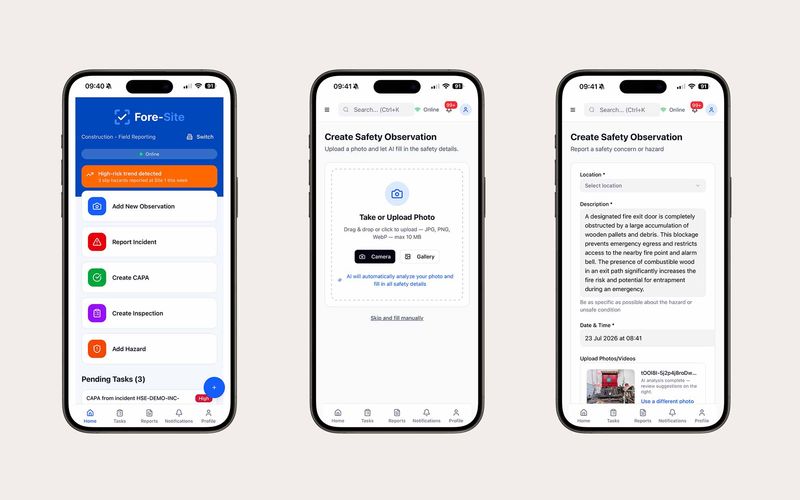
AI HSE reporting, from a single photo.
Our own product: an AI-powered progressive web app that turns a single photo into a complete observation, incident or hazard report — with a desktop command centre for tracking, investigation and approvals. Works offline and syncs on reconnect.
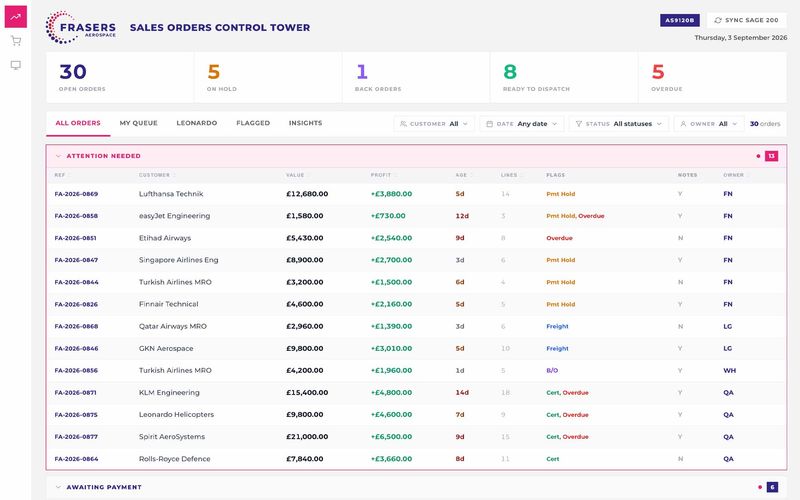
Frasers Aerospace — Operations Control Tower
An operations dashboard for an AS9120B aerospace supplier, built in Microsoft Lists and Power BI — orders from Sage 200 and WooCommerce in one place, the spreadsheets they used to be raised in retired, the exceptions blocking them surfaced first, and a TV wallboard for the warehouse floor.
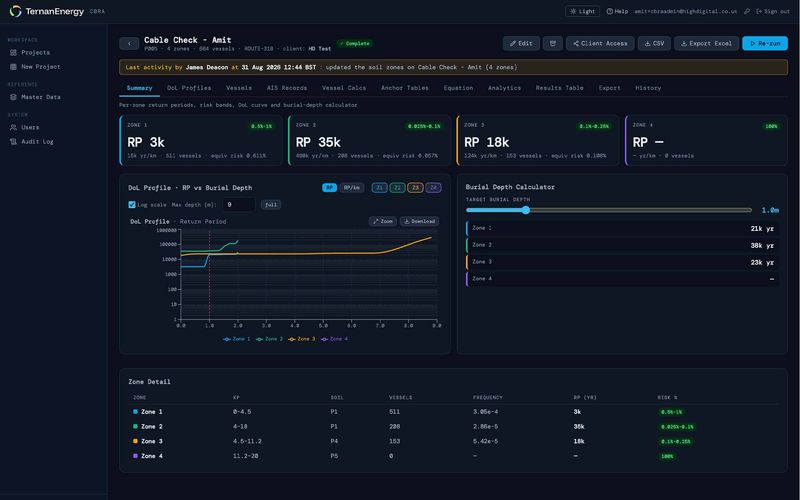
A 12-tab spreadsheet, rebuilt as a risk platform
Offshore cable burial risk assessment taken out of a straining Excel workbook and rebuilt as a Python engine and React application on Microsoft Azure — a hundred thousand rows of AIS vessel data, Carbon Trust anchor-strike methodology, and depth-of-lowering curves for every soil zone on a route.
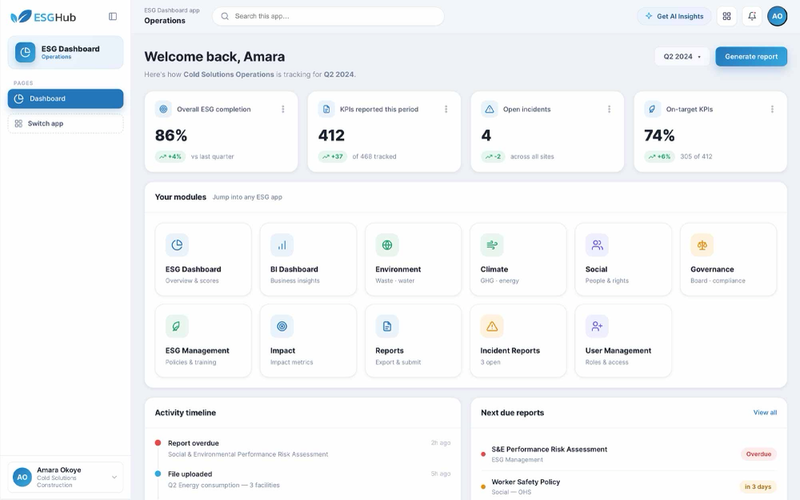
Real-time carbon & compliance reporting for cold chain.
A data management platform built to manage ESG data and deliver ESG insights, analytics and reports to the business and its stakeholders.
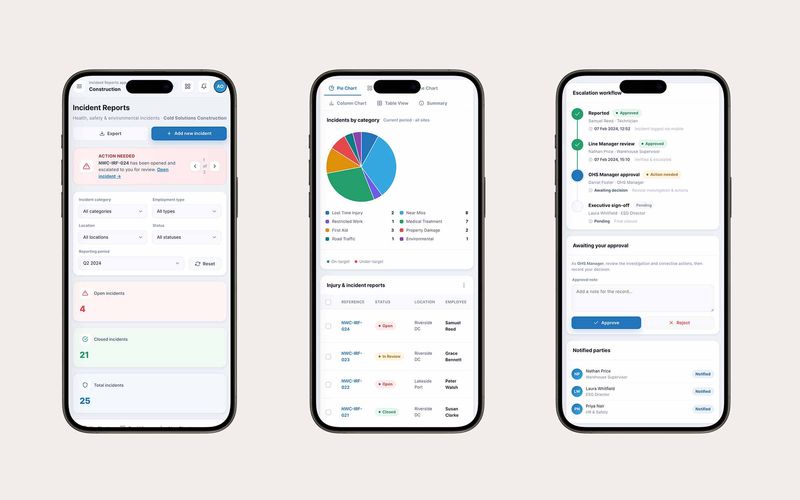
Time-critical incident reporting, built for the field.
A realtime incident reporting application built to collect, escalate and report on incident data across the cold chain and construction business.
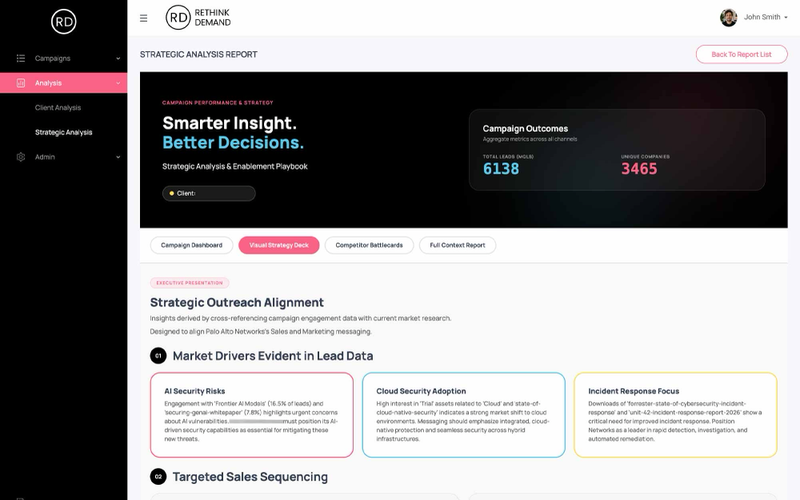
A single source of truth for prospect intelligence.
A centralised platform to manage the acquisition, cleansing, matching and enrichment of prospect data at scale — replacing fragmented sources and manual scoring with one unified system.
What a Microsoft Fabric build usually includes.
More on Microsoft Fabric, and how we use it.
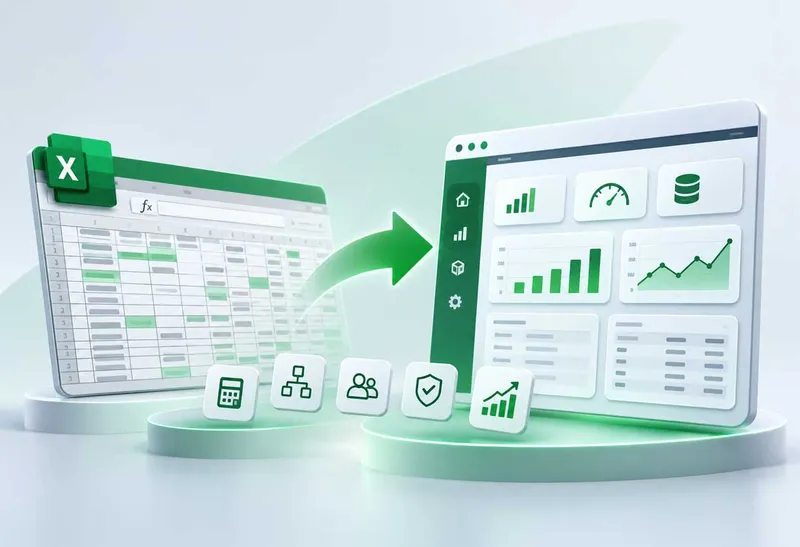
When should you turn a critical Excel model into an application?
Slow runs, copies of copies and one expert who understands it. The signs a critical spreadsheet model has outgrown Excel, how to rebuild it without changing the answers, and what we learned rebuilding a cable burial risk model.
Read more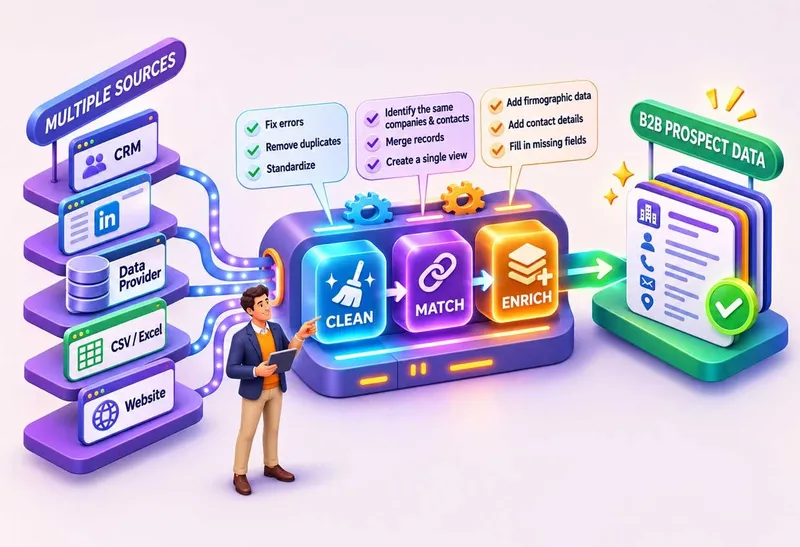
How do you clean, match and enrich B2B prospect data from multiple sources?
Prospect data from CRMs, providers and bought lists rarely agrees. Here’s how to normalise, match, enrich and score it in one pipeline, and what we learned building a prospect intelligence platform for a B2B marketing business.
Read more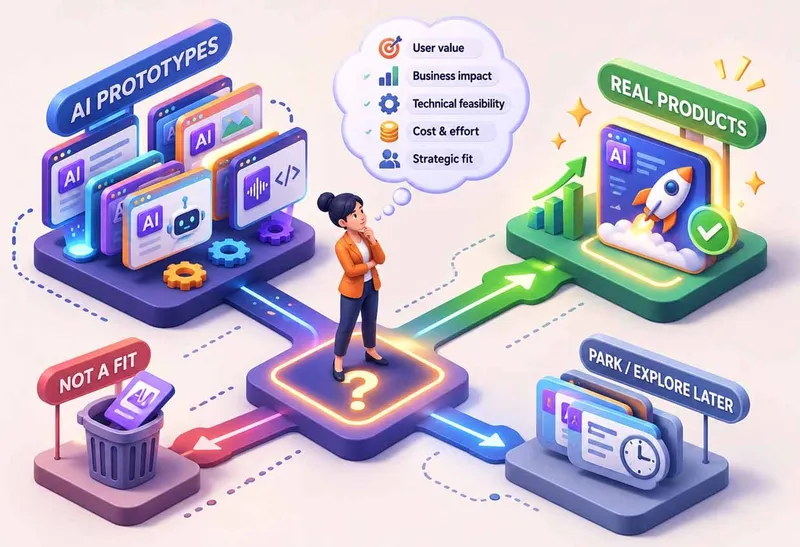
AI prototypes everywhere? How to decide which ones become real products
AI makes prototypes cheap. It doesn’t make production cheap. Here’s how to decide which prototypes earn an owner, a review and a place in your real systems.
Read moreThe stack we ship on.
Pragmatic, mostly boring, and chosen because it works in production — not because it's on the front page of Hacker News.
Have an outcome in mind?
We'll help you
ship it.
- You're building a data product and need a team that can deliver.
- You want to get AI-ready — pragmatically, not theoretically.
- Your reporting is a mess and you need a real platform underneath it.