ClickHouse, for analytics at real scale.
ClickHouse is what we reach for when a normal database starts to strain — billions of rows, dashboards that need to stay fast, and queries that scan more than they look up. It's a columnar engine built for exactly that, and it changes what "fast" means for reporting.


Where ClickHouse earns its place in the stack.
Real-time dashboards & reporting
Sub-second aggregation over billions of rows means dashboards that stay fast as data grows, instead of getting slower every quarter.
Event & log analytics
Clickstream, telemetry, application logs — high-volume event data lands naturally in ClickHouse and stays queryable, not just stored.
Data warehousing at scale
Where a transactional database starts to strain under analytical load, ClickHouse sits alongside it as the engine built specifically for that job.
High-throughput ingestion
Built to take a constant stream of writes without falling over — batched inserts at volumes that would choke a row-oriented database.
Built for the queries that hurt everywhere else.
Most databases are built to find one row fast. ClickHouse is built to scan millions of them fast — a different problem, and one that most general-purpose databases were never designed to solve.
We reach for it specifically when a reporting or analytics workload is starting to dominate a system it was never meant to carry, and moving that workload onto the right engine turns a painful query into a genuinely fast one.
Built for scan-heavy queries
Columnar storage means a query that touches three columns out of thirty only reads three columns — not the whole row. That's where the speed comes from.
Scales with your data, not against it
Performance on a billion-row table looks a lot like performance on a ten-million-row table. We've seen the alternative, and it isn't pretty.
Plays well with the rest of the stack
Native connectors for Kafka, S3 and most BI tools mean it slots into an existing pipeline rather than demanding you rebuild around it.
Serious performance without the licence bill
Open source, and frugal with hardware for the throughput it delivers — the cost profile looks very different to the proprietary warehouses it competes with.
Not sure ClickHouse is the right call? Ask the engineer who'd build it.
Book a 30-minute working session with a senior engineer — a real conversation about your data and reporting, not a sales call.
Where the numbers stayed fast.
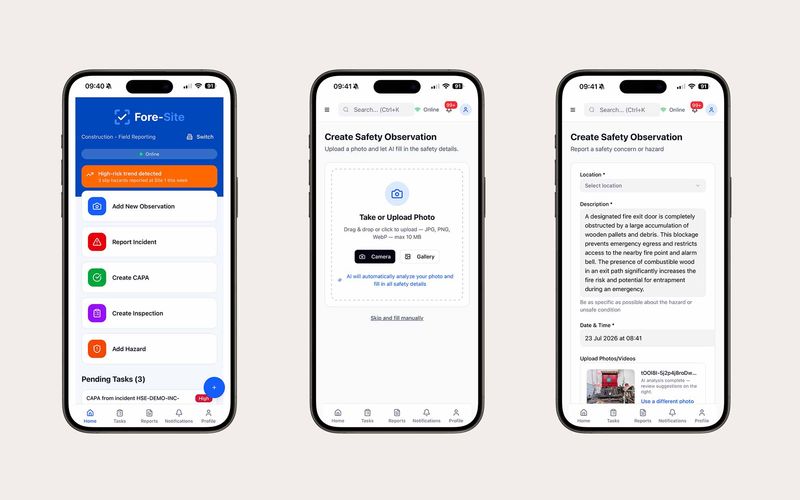
AI HSE reporting, from a single photo.
Our own product: an AI-powered progressive web app that turns a single photo into a complete observation, incident or hazard report — with a desktop command centre for tracking, investigation and approvals. Works offline and syncs on reconnect.
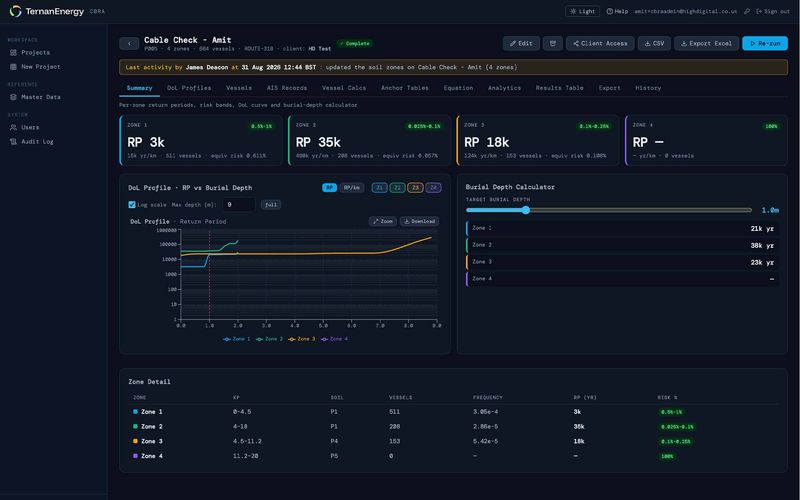
A 12-tab spreadsheet, rebuilt as a risk platform
Offshore cable burial risk assessment taken out of a straining Excel workbook and rebuilt as a Python engine and React application on Microsoft Azure — a hundred thousand rows of AIS vessel data, Carbon Trust anchor-strike methodology, and depth-of-lowering curves for every soil zone on a route.
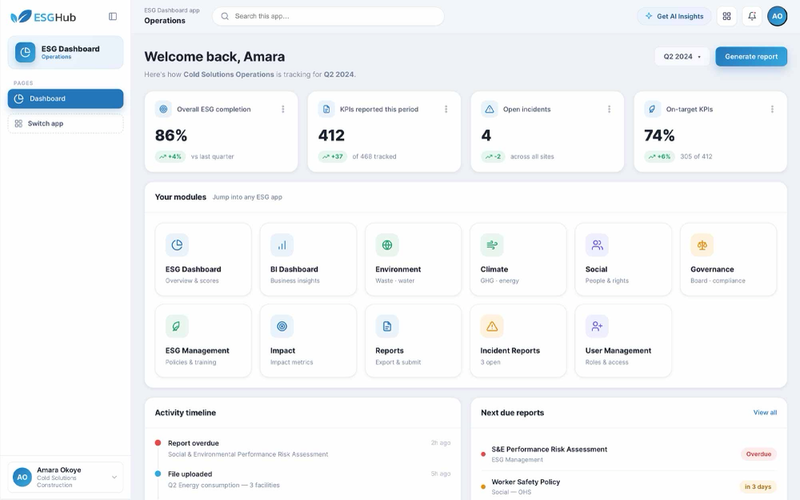
Real-time carbon & compliance reporting for cold chain.
A data management platform built to manage ESG data and deliver ESG insights, analytics and reports to the business and its stakeholders.
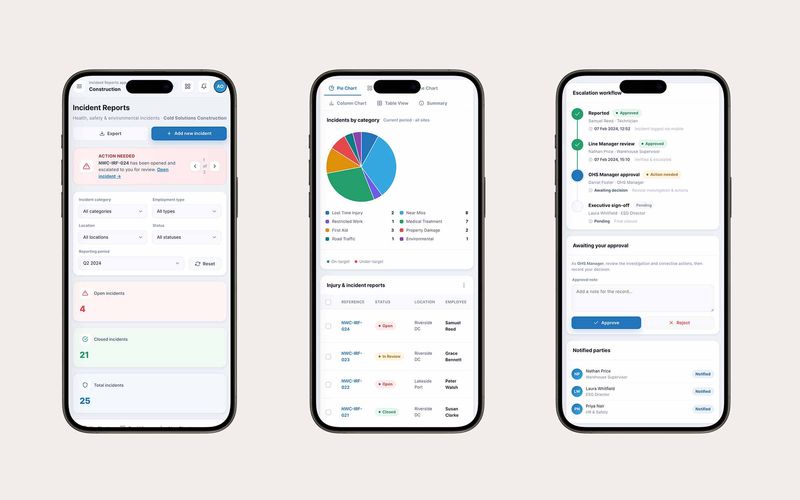
Time-critical incident reporting, built for the field.
A realtime incident reporting application built to collect, escalate and report on incident data across the cold chain and construction business.
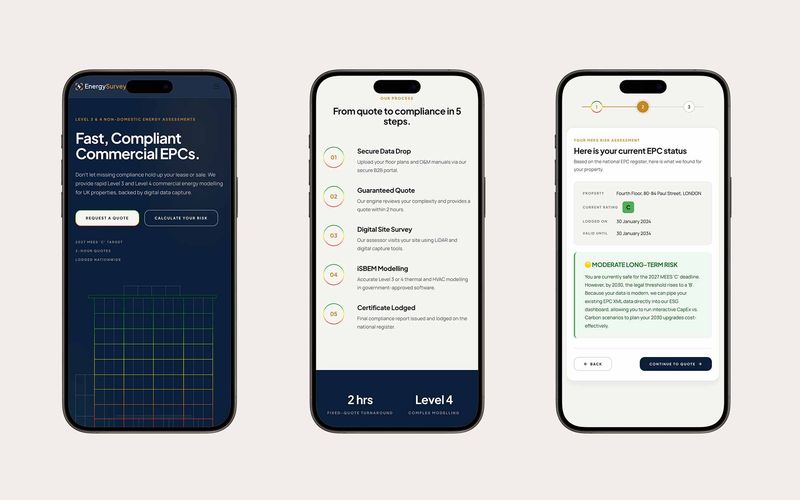
An EPC risk calculator that quotes in minutes.
Our own product for commercial EPCs: an online EPC Risk Calculator that checks a building against the national register, shows its MEES risk instantly, and turns it into a fixed quote for a Level 3 or 4 assessment in under two hours.
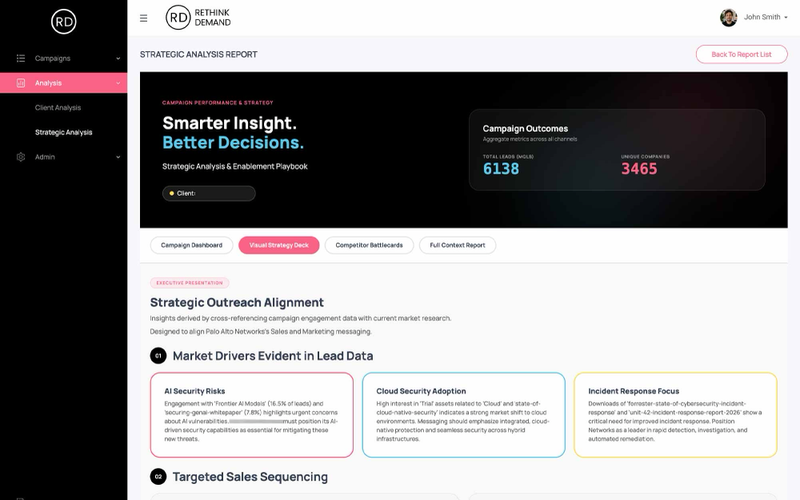
A single source of truth for prospect intelligence.
A centralised platform to manage the acquisition, cleansing, matching and enrichment of prospect data at scale — replacing fragmented sources and manual scoring with one unified system.
What a ClickHouse build usually includes.
More on ClickHouse, and how we use it.
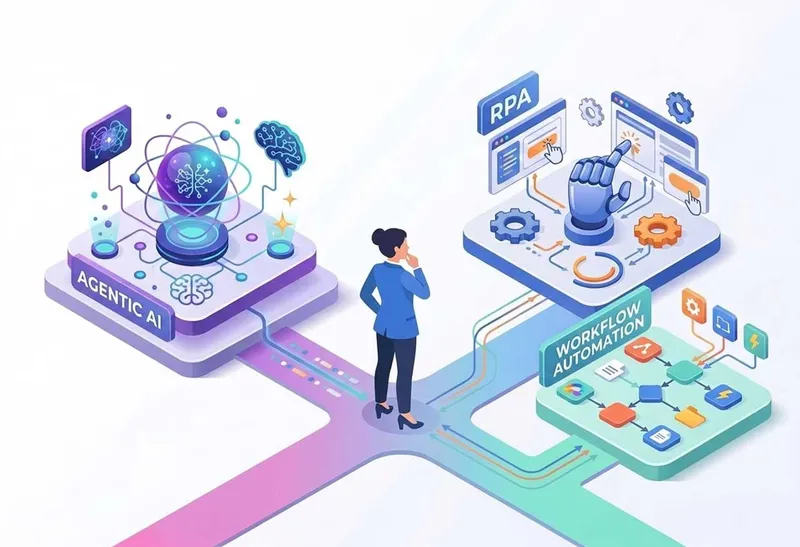
Agentic AI vs RPA vs Workflow Automation: Which Does Your Process Need?
Week 3 of the High Digital Workflow Automation Series. Workflow automation, RPA and AI agents solve different problems. Here’s how to tell which one a process needs, and why the best answer is often all three.
Read more
High Digital Earns OpenAI ChatGPT & Codex Solutions Practitioner Recognition
High Digital has earned both ChatGPT Solutions Practitioner and Codex Solutions Practitioner recognition from the OpenAI Partner Network.
Read more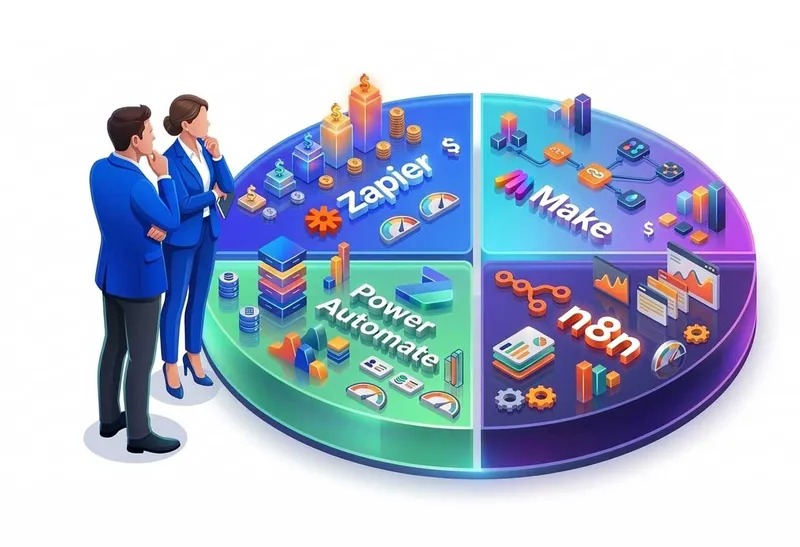
Zapier vs Make vs n8n vs Power Automate: What Workflow Automation Really Costs in 2026
Week 2 of the High Digital Workflow Automation Series. Each platform bills on a different unit, so headline prices mislead. We run one real workflow through all four to show what you’d actually pay.
Read moreThe stack we ship on.
Pragmatic, mostly boring, and chosen because it works in production — not because it's on the front page of Hacker News.
Have an outcome in mind?
We'll help you
ship it.
- You're building a data product and need a team that can deliver.
- You want to get AI-ready — pragmatically, not theoretically.
- Your reporting is a mess and you need a real platform underneath it.