FastAPI, for APIs that keep up with the data behind them.
FastAPI is our default for the API layer sitting in front of a data or AI product — typed, async, and fast enough that it's never the bottleneck. It documents itself, catches whole categories of bugs before they ship, and reads like the Python it's built on.


Where FastAPI earns its place in the stack.
APIs in front of data & AI
The layer between a model or pipeline and the outside world — FastAPI serves predictions, exposes datasets, and handles the traffic without becoming the bottleneck.
Typed, validated services
Pydantic models validate every request at the boundary, so malformed data gets rejected before it ever reaches your business logic.
Internal tools & microservices
Small, focused services that do one job well — often the fastest way to expose an internal capability without dragging in a heavier framework.
Self-documenting APIs
OpenAPI and Swagger docs generate straight from the code, so the documentation a client or teammate reads can't quietly drift from what's actually deployed.
Fast enough that it's never the reason something's slow.
FastAPI is our default whenever a Python data or AI system needs a real API in front of it. It's async-native, built on solid foundations in Starlette and Pydantic, and fast enough that the API layer is rarely what's holding a system back.
The type hints aren't just for readability — they generate request validation, response models and interactive docs automatically, which means less boilerplate and fewer bugs that only show up once a client sends something unexpected.
Async by default
Built on Starlette, FastAPI handles concurrent, I/O-heavy work — calls to a model, a database, another service — without extra plumbing to keep things fast.
Types that do real work
Pydantic models aren't decoration. They validate incoming requests, shape outgoing responses, and catch a whole class of bugs before they reach production.
Docs that can't go stale
OpenAPI documentation generates from the code itself. There's no separate spec to fall out of sync — the docs are always describing what's actually deployed.
Same team, same language
The engineers who build your data and AI layer in Python build the API in front of it too — no handoff, no second team to keep in sync.
Not sure FastAPI's the right fit? Ask the engineer who'd build it.
Book a 30-minute working session with a senior engineer — a real conversation about your API, not a sales call.
Built with clients
who measure outcomes.
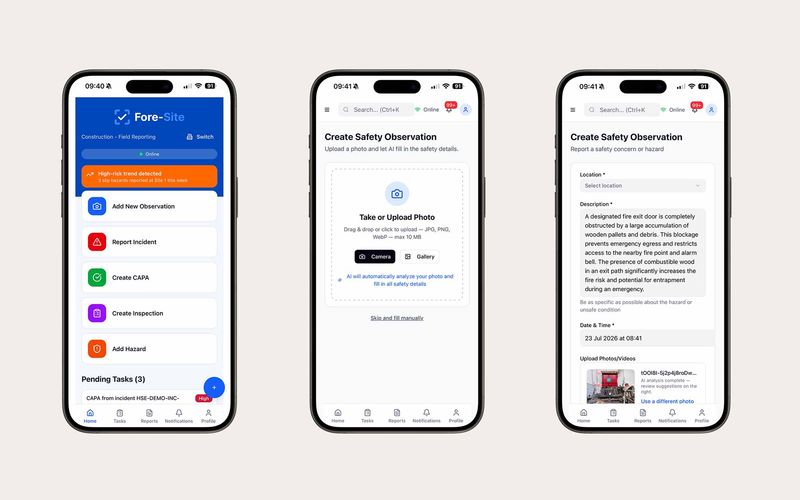
AI HSE reporting, from a single photo.
Our own product: an AI-powered progressive web app that turns a single photo into a complete observation, incident or hazard report — with a desktop command centre for tracking, investigation and approvals. Works offline and syncs on reconnect.
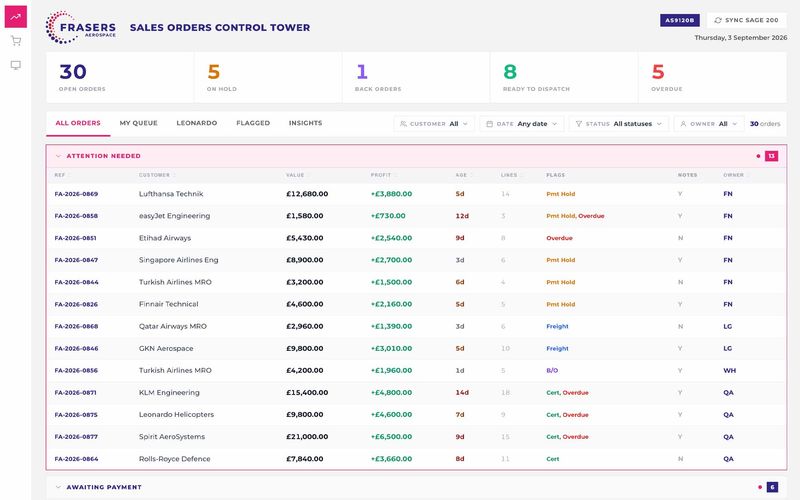
Frasers Aerospace — Operations Control Tower
An operations dashboard for an AS9120B aerospace supplier, built in Microsoft Lists and Power BI — orders from Sage 200 and WooCommerce in one place, the spreadsheets they used to be raised in retired, the exceptions blocking them surfaced first, and a TV wallboard for the warehouse floor.
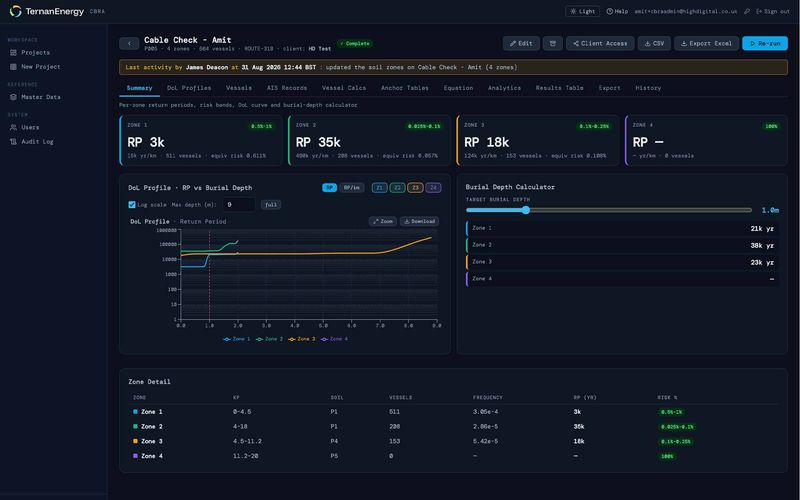
A 12-tab spreadsheet, rebuilt as a risk platform
Offshore cable burial risk assessment taken out of a straining Excel workbook and rebuilt as a Python engine and React application on Microsoft Azure — a hundred thousand rows of AIS vessel data, Carbon Trust anchor-strike methodology, and depth-of-lowering curves for every soil zone on a route.
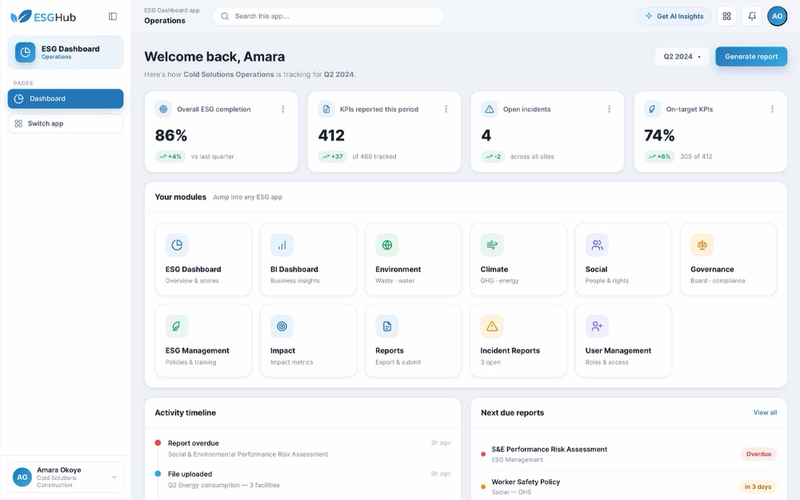
Real-time carbon & compliance reporting for cold chain.
A data management platform built to manage ESG data and deliver ESG insights, analytics and reports to the business and its stakeholders.
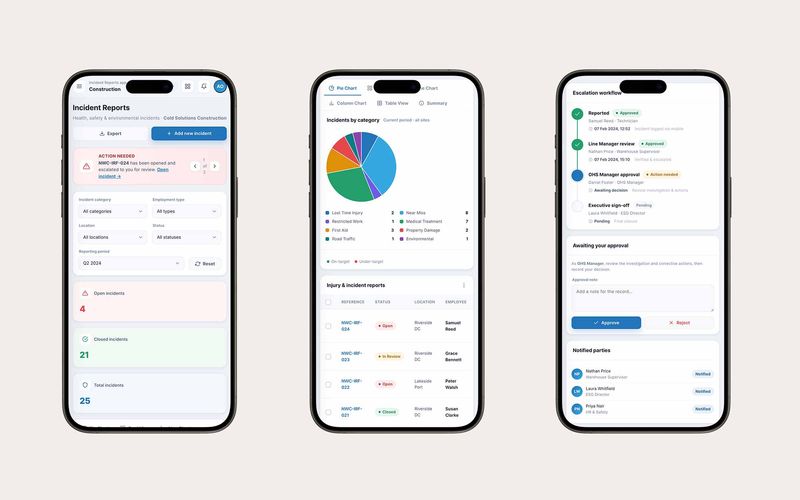
Time-critical incident reporting, built for the field.
A realtime incident reporting application built to collect, escalate and report on incident data across the cold chain and construction business.
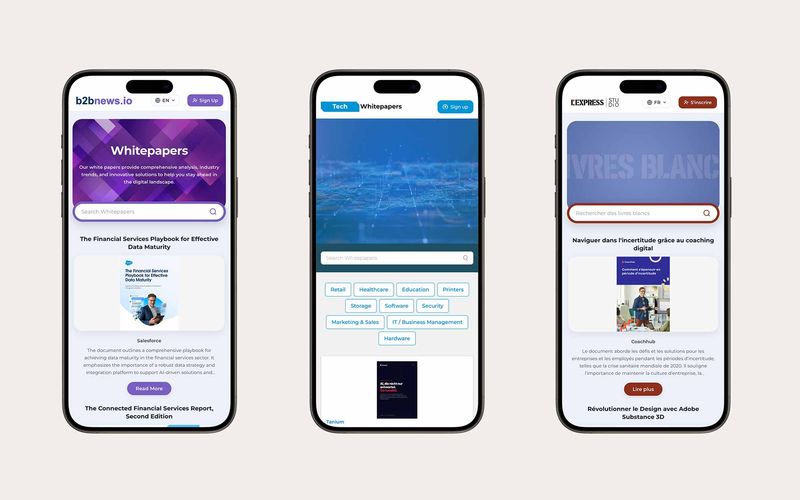
One whitepaper platform, styled for every client.
A template-driven, multilingual whitepaper platform for Rethink Demand's clients — brandable in minutes, synced to Hermes, and built to capture and track every lead.
What a FastAPI build usually includes.
More on FastAPI, and how we use it.

Proposal App AI-Driven Scoping & Estimation
Week 6 of the High Digital AI Initiatives Series. We’ve saved one of our biggest commercial bottlenecks for last: generating enterprise project proposals.
Read more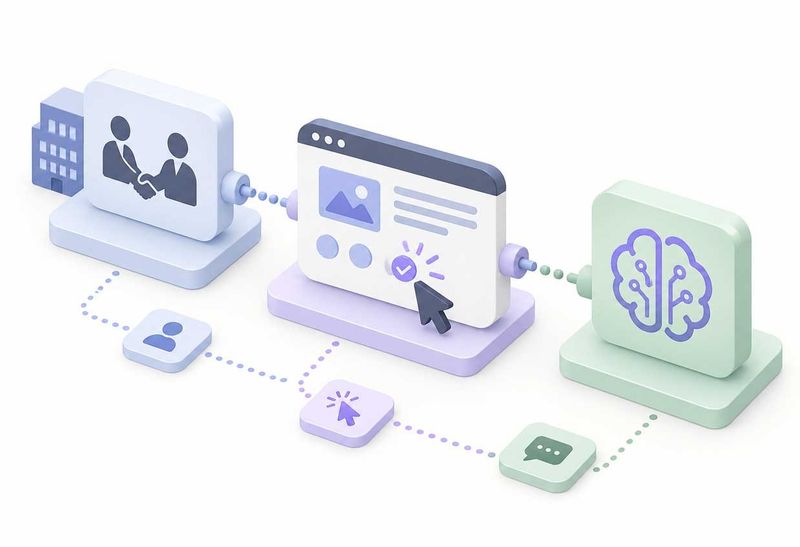
B2B White-papers Interactive Content & NLP
Week 5 of the High Digital AI Initiatives Series. Today, we are radically redesigning how B2B buyers interact with thought leadership content.
Read more
Fore-Site: Computer Vision for Field Operations
Week 4 of the High Digital AI Initiatives Series. This week, we’re moving from the database to the field, exploring applied computer vision
Read moreThe stack we ship on.
Pragmatic, mostly boring, and chosen because it works in production — not because it's on the front page of Hacker News.
Have an outcome in mind?
We'll help you
ship it.
- You're building a data product and need a team that can deliver.
- You want to get AI-ready — pragmatically, not theoretically.
- Your reporting is a mess and you need a real platform underneath it.