Database development, built for the data in front of it.
There's no single database that's right for every job. PostgreSQL, MongoDB, Databricks, ClickHouse and Microsoft Fabric each earn their place for a different reason — and we pick whichever one actually fits your data, your scale, and what the system needs to do once it's live.


The databases and platforms behind our data work.
PostgreSQL
Our default relational database — reliable, standards-compliant, and the right call whenever data integrity matters most.
Learn more 02MongoDB
For data that doesn't fit neat rows — flexible schemas, fast iteration, and a natural fit for document-shaped data.
Learn more 03Databricks
For data engineering and AI at real scale — pipelines, a lakehouse, and machine learning on the same platform.
Learn more 04ClickHouse
For analytics at real scale — sub-second aggregation over billions of rows, built for dashboards and reporting.
Learn more 05Microsoft Fabric
For teams already invested in the Microsoft stack — warehousing, Power BI and governance in one platform.
Learn moreSame senior team, whichever database fits.
Database development isn't one thing, and treating it like one is how projects end up on a store that doesn't fit the problem. The right choice depends on your data shape, your scale, and how the system needs to be queried once it's live.
What doesn't change is who's building it. Every one of these five platforms is used in-house by the same senior engineering team — no junior bench, no outsourced specialists brought in for one database and gone by the next project.
The right store, not the familiar one
We pick per project, not per habit — a reporting-heavy product gets ClickHouse, a document-shaped one gets MongoDB, and so on.
Senior engineers, not specialists in one thing
The same engineers who scope your project can work across this stack, which means less time spent finding the "right" person and more time building.
Production-grade from day one
Schema design, indexing and query performance aren't an afterthought bolted on before launch — they're how we build from the first commit.
Chosen for the data, not the trend
We're not chasing whatever's newest. Every database here earns its place because it's genuinely the best fit for a class of problem we see repeatedly.
Not sure which database fits? Ask the engineer who'd build it.
Book a 30-minute working session with a senior engineer — a real conversation about your data, not a sales call.
Database systems, built and shipped.
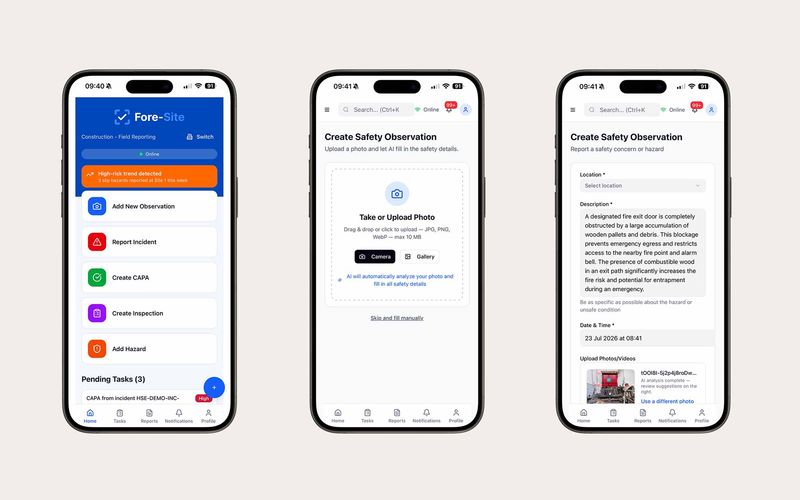
AI HSE reporting, from a single photo.
Our own product: an AI-powered progressive web app that turns a single photo into a complete observation, incident or hazard report — with a desktop command centre for tracking, investigation and approvals. Works offline and syncs on reconnect.
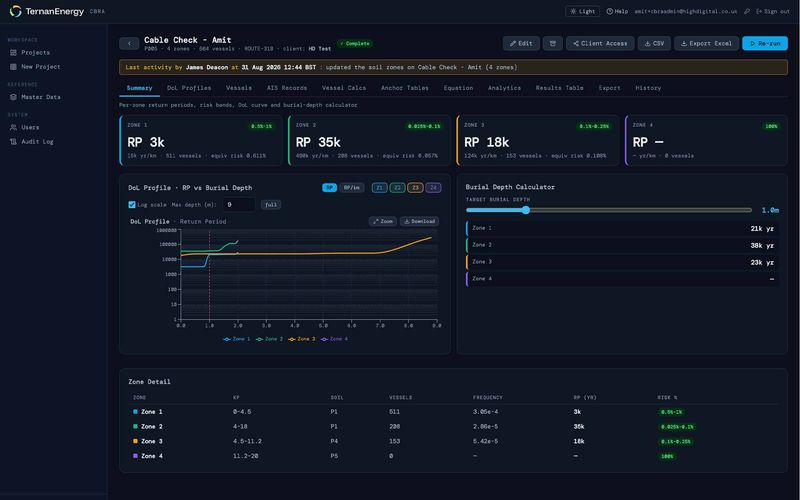
A 12-tab spreadsheet, rebuilt as a risk platform
Offshore cable burial risk assessment taken out of a straining Excel workbook and rebuilt as a Python engine and React application on Microsoft Azure — a hundred thousand rows of AIS vessel data, Carbon Trust anchor-strike methodology, and depth-of-lowering curves for every soil zone on a route.
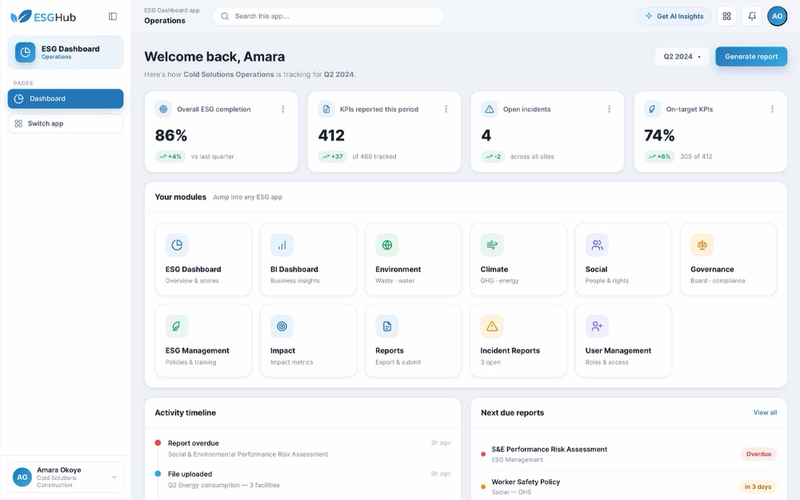
Real-time carbon & compliance reporting for cold chain.
A data management platform built to manage ESG data and deliver ESG insights, analytics and reports to the business and its stakeholders.
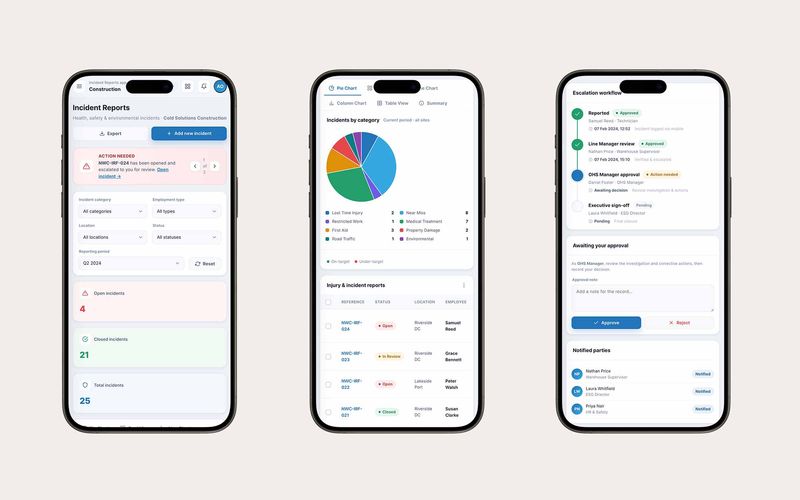
Time-critical incident reporting, built for the field.
A realtime incident reporting application built to collect, escalate and report on incident data across the cold chain and construction business.
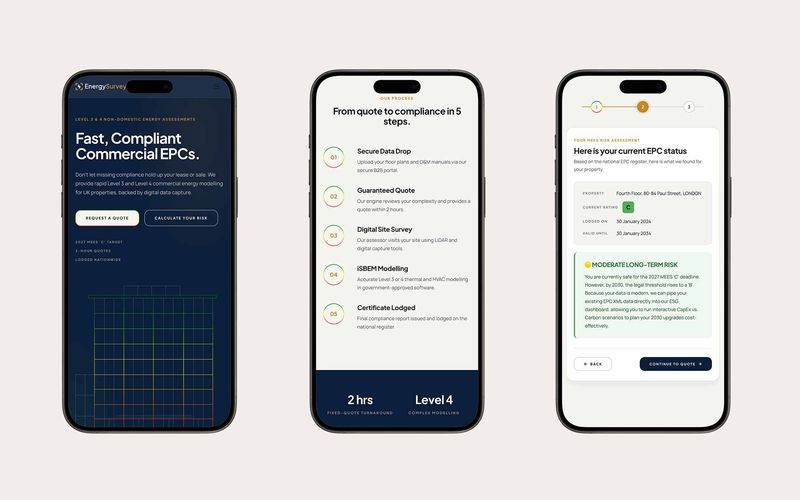
An EPC risk calculator that quotes in minutes.
Our own product for commercial EPCs: an online EPC Risk Calculator that checks a building against the national register, shows its MEES risk instantly, and turns it into a fixed quote for a Level 3 or 4 assessment in under two hours.
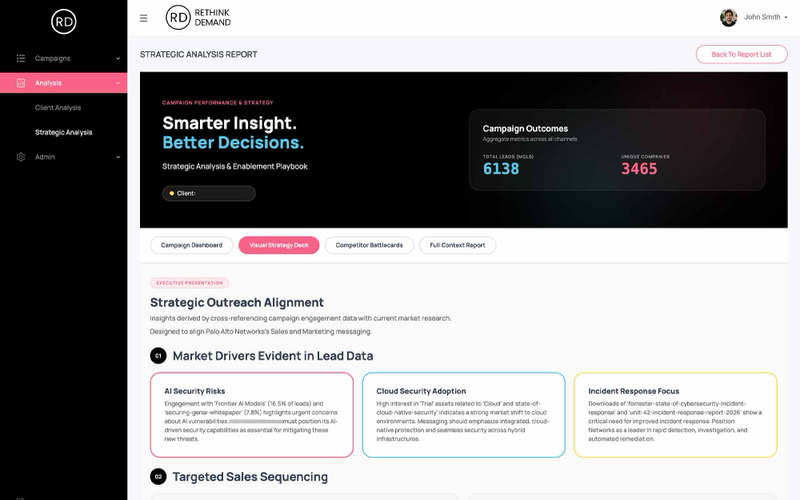
A single source of truth for prospect intelligence.
A centralised platform to manage the acquisition, cleansing, matching and enrichment of prospect data at scale — replacing fragmented sources and manual scoring with one unified system.
More on database development.
Proposal App AI-Driven Scoping & Estimation
Week 6 of the High Digital AI Initiatives Series. We’ve saved one of our biggest commercial bottlenecks for last: generating enterprise project proposals.
Read more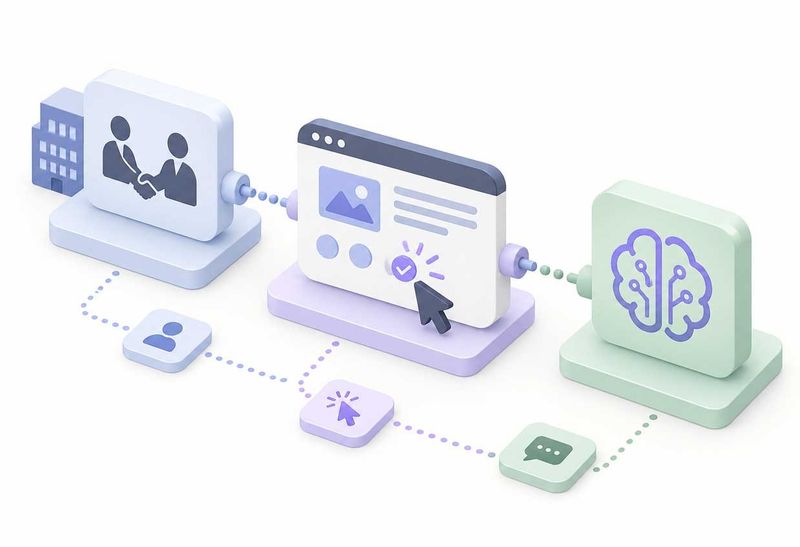
B2B White-papers Interactive Content & NLP
Week 5 of the High Digital AI Initiatives Series. Today, we are radically redesigning how B2B buyers interact with thought leadership content.
Read more
Fore-Site: Computer Vision for Field Operations
Week 4 of the High Digital AI Initiatives Series. This week, we’re moving from the database to the field, exploring applied computer vision
Read moreThe stack we ship on.
Pragmatic, mostly boring, and chosen because it works in production — not because it's on the front page of Hacker News.
Have an outcome in mind?
We'll help you
ship it.
- You're building a data product and need a team that can deliver.
- You want to get AI-ready — pragmatically, not theoretically.
- Your reporting is a mess and you need a real platform underneath it.