Why 17th-Century Secretary Script Is So Difficult
Some projects are technical. Some are operational. And every now and then, one is quietly profound.
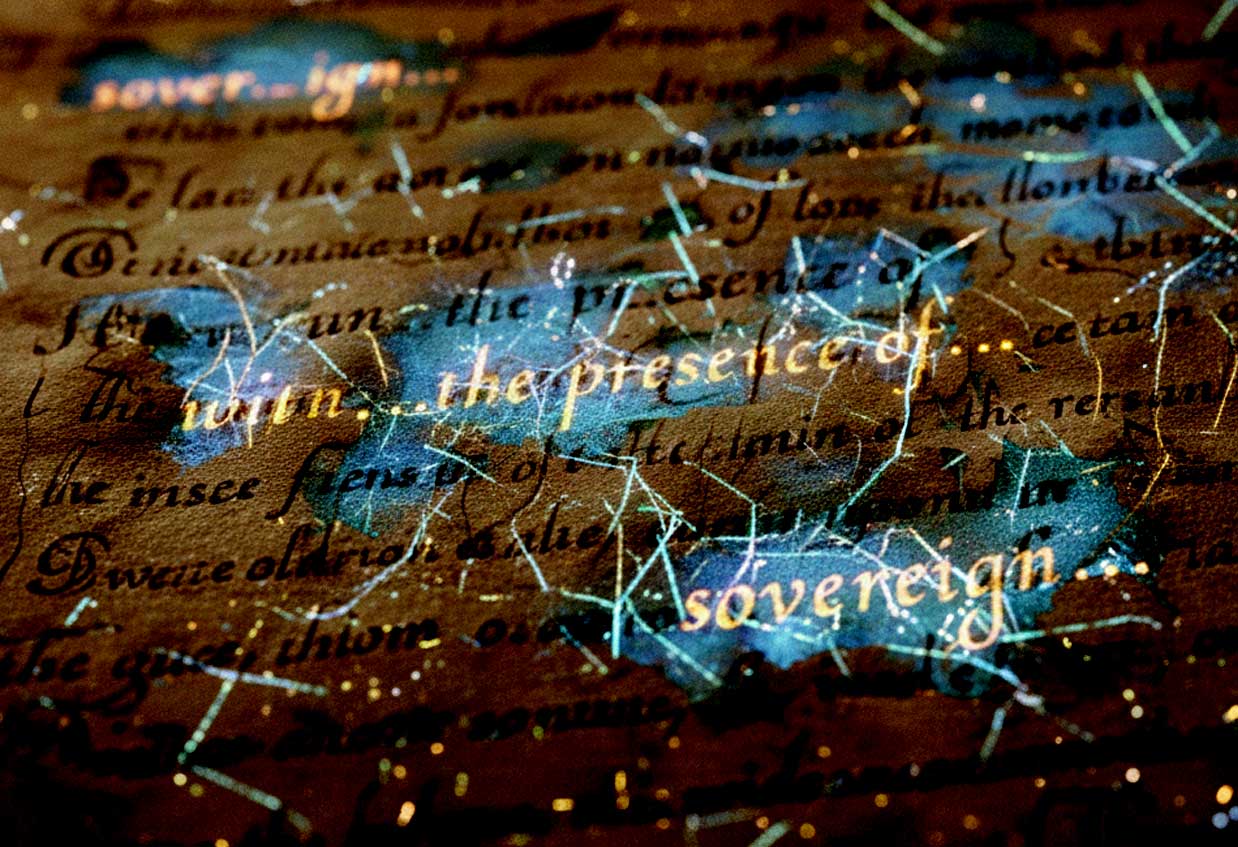
This month at High Digital, we began work on something a little different from our usual data pipelines, AI agents and analytics platforms. We were asked to help recover the contents of a badly damaged 17th-century document written in Secretary Script, a handwriting style once common across England, but now notoriously difficult to read, even in perfect condition.
This document is not in perfect condition.
What survives today is faded, stained, fragmented and in places barely visible to the human eye. Traditional restoration methods reached their limit. What remained was a question:
Could modern AI help pull meaning back from the shadows of history?
It’s exactly the kind of challenge we love.
Before the 18th century, English wasn’t written in the style we recognise today. Secretary Script was a compact, angular, looping form of handwriting with severe variations between writers. It is, to put it mildly:
-
highly inconsistent,
-
faint and fragile on surviving documents,
-
filled with archaic letter shapes,
-
peppered with abbreviations, contractions and flourishes,
-
and extremely prone to misinterpretation.
Palaeographers train for years to read it fluently.
Now imagine reading it when half the characters are missing.
This is where AI, ironically, becomes not a modern intrusion but a respectful supporting tool. Machines don’t “understand” the script emotionally, but they can recognise patterns at pixel-level granularity that humans cannot.
How We Approached the Problem
At High Digital, we took a multi-stage approach inspired by image restoration, machine learning and pattern recognition disciplines. Our goal was not to “invent” content, but to recover what is genuinely present and help experts interpret the rest.
1. High-Resolution Image Enhancement
We applied advanced pre-processing to remove noise, strengthen faint ink traces, and separate paper grain from potential character strokes. This included:
-
contrast expansion,
-
spectral filtering,
-
texture suppression,
-
and adaptive threshold techniques.
Tiny marks previously invisible became candidates for analysis.
2. Probabilistic Reconstruction of Secretary Script Characters
We trained models on examples of historical Secretary Script letterforms, enabling the AI to recognise typical shapes even when incomplete.
This allows it to:
-
predict partial curves,
-
estimate missing ascenders or descenders,
-
distinguish letters that often appear similar (r, v, w, n…),
-
and measure statistical likelihoods of competing interpretations.
This is where the model stops being simply “image processing” and becomes a genuine assistant to palaeographers.
3. Segmentation and Region Mapping
The document was digitally broken into smaller logical units, strokes, letter clusters, and spatial patterns. The system identified:
-
probable word boundaries,
-
line geometry,
-
marginal drift (common in handwritten documents),
-
and subtle indentations or ink pools.
This segmentation step is crucial, because the spacing in old handwriting is rarely consistent.
4. Human-in-the-Loop Interpretation
AI never replaces the historian.
It amplifies them.
We provide a dual-layer output:
-
machine predictions, ranked by probability;
-
rendered overlays, highlighting where the model sees ink, shape or potential characters.
Experts then make informed decisions, using AI to extend their reach, not override their judgment.
Why This Matters
Documents like this hold stories, agreements, land transfers, personal accounts, legal proceedings, debts, permissions, or daily human details that would otherwise be lost. They form threads in a wider tapestry of cultural memory.
Helping restore them isn’t “just” a data project.
It’s heritage preservation empowered by technology.
We often say that data tells stories.
In this case, it literally is a story, one that has been physically damaged but not yet destroyed.
The challenge is unique, but the principle is familiar:
take something messy, noisy and incomplete
apply structure, clarity and intelligence
and reveal meaning beneath the surface
It’s the same philosophy behind modern analytics, AI automation and data engineering, applied here to something far older and more fragile.
The Broader Potential
Our work on this document hints at wider applications:
-
restoring damaged archives,
-
supporting museums and libraries with digitisation,
-
aiding historians working with degraded manuscripts,
-
rescuing handwritten material impacted by time or environmental damage,
-
strengthening the bridge between modern machine learning and classical scholarship.
If AI can help us read the past, it may also help us preserve the future.
A Quietly Powerful Intersection: Data and History
Most of our projects at High Digital involve operational efficiency, analytics, automation, agentic AI workflows and modern architectures; Fabric, Databricks, ClickHouse, Python, pipelines, warehouses.
But at the heart of all data work is something this project captures beautifully:
Data is always human.
Always meaningful.
Always carrying someone’s voice.
Even when written in ink four centuries ago.
Get in touch with your AI challenge